Marketing & Sales for Startups: A Practical Blueprint

The Marketing Mix: Strategic Pricing, Sales, and Multi-Channel Communication
By this stage, you have already planned several marketing elements according to a classical academic approach: your product or service is defined, you have performed a market and competition analysis, and you have developed your business model and revenue model. Don’t be confused by the terminology; a business plan is structured differently than a classical marketing concept. This chapter focuses on your price calculation, sales channels, and communication measures. Additionally, you can explain to your financial or business partners exactly how you plan to enter the market.
Price, distribution channels, and marketing measures are directly connected to your market and competition analysis. At this point, planned marketing is about much more than just advertising—the entire strategy must be an organic fit for your product or service.
Describe your expected typical sales process. Compare this with the competition's processes where applicable, and outline how sales and other measures will be taken to exploit identified market potential. Do not underestimate the work involved here; your strategy for the sales concept, communication measures, and market entry should be presented in detail, as all planned expenses must be reflected in your subsequent financial planning.
1. Data-Driven Pricing Models and ROI Justification
The development of your sales concept includes appropriate pricing. Justify your prices with regard to your target group and their purchasing power. Orient yourself on the prices of comparable products or services already on the market. If you sell to retailers, account for their trade margin regarding the final selling price. Make your prices transparent and derive them plausibly so readers understand your calculation is based on concrete considerations rather than gut feeling. Remember that end customers pay gross prices (net price plus sales tax), while you must plan with the net price.
Critical Questions to Answer:
- With which net and gross price do you want to position yourself? What price will you charge for each target customer group and distribution channel?
- What is the core goal of your pricing strategy?
- Is your pricing aligned with your target group's expectations?
- What criteria determine the final selling price (e.g., profit margin, sales volume)?
- Are there special conditions such as discounts or payment terms?
- What is the projected price development over time?
- What is your retail margin per sales channel and product?
2. Scalable Distribution and Multi-Channel Sales Logic
Even a great product must "get to the customer." If you don't sell, the company fails before it begins. Different products for different target groups require individual considerations. Your sales concept should present the process in detail, identify sales channels, and account for costs. Specify your sales department planning: how will it be equipped in terms of personnel, equipment, and space? Describe the requirements, qualification, and motivation of your sales staff.
If you offer high volumes of low-cost products, consider if distribution via wholesalers makes sense. The most important factor is determining which distribution channels best reach your specific target group. How will you communicate added value to decision-makers? Are you aiming for high brand recognition or a spontaneous connection between your product and a specific customer benefit?
Critical Questions to Answer:
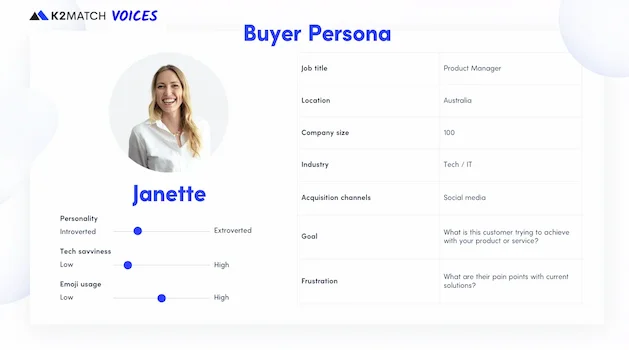
- Who exactly is your "typical customer" (Persona), and who is involved in their buying process?
- What payment policy (down payments, terms) do you set, and how is this reflected in financial planning?
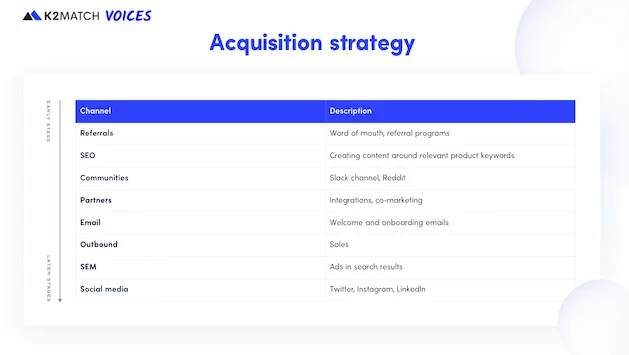
- What are your primary sales channels, and which target groups do they reach?
- What is the typical sales process, and how do you ensure quality and consistency?
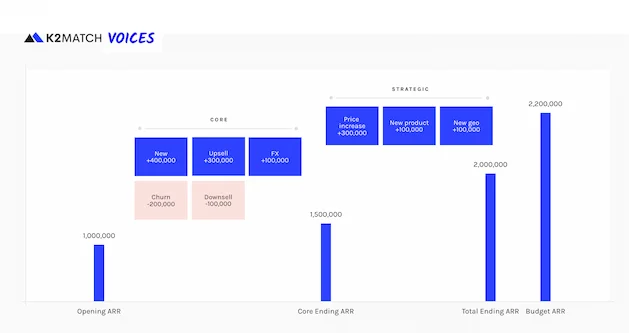
- What sales volumes and turnover figures do you expect in the first three years?
3. Integrated Marketing Communication and PR Strategy
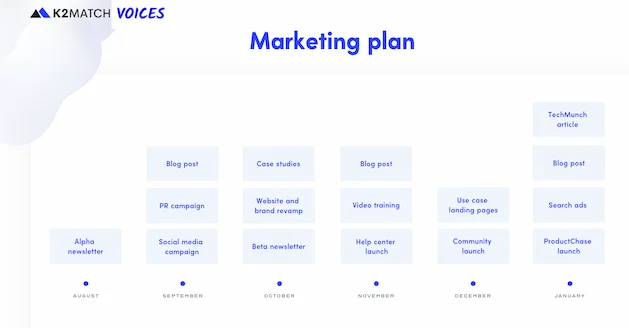
Your choice of communication measures depends on your chosen sales structure and the long-term image you wish to convey. Decide on an ideal mix of classic advertising (ads, radio, Google Search Ads), PR, and sales promotions (stands, packaging). Your business equipment, including cards, logo, and web presence, are essential parts of this planning. Provide an overview of these measures and summarize the resulting costs in a summary table.
Critical Questions to Answer:
- Are there specific brand names under which you will sell?
- What communication measures and core messages are you planning?
- How will you draw attention to your offer, win new customers, and retain them long-term?
- What are the projected costs for PR and marketing over time?
- Have you drawn up a detailed monthly time and cost plan (Marketing Plan)?
4. Execution Roadmap: Market Entry and Go-To-Market (GTM) Strategy
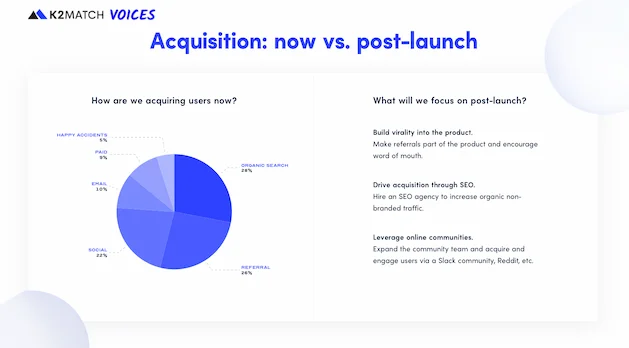
Market entry is listed separately because new products often require unique launch measures. You must decide between large-scale advertising campaigns or targeted methods, such as working with pilot customers. Because these measures are often one-time steps, consider if they are financed via the recurring marketing budget or separate start-up investment capital.
Critical Questions to Answer:
- Which customer references do you already have or wish to acquire? In which regions will you enter first?
- What specific steps and additional expenses are involved in the product introduction?
- Which special advertising measures (discounts, coupons) will you use for entry?
- How long will the market entry phase take based on your milestone planning?
Summary: Operationalizing Your Market Presence
The Marketing Mix serves as the operational engine of the business plan, transforming theoretical market research into a concrete roadmap for revenue. By aligning Strategic Pricing with Persona-driven distribution and a fully costed Communication Strategy, founders ensure that every marketing dollar contributes to measurable market entry. Ultimately, a successful Go-to-Market (GTM) strategy bridges the gap between a product's value proposition and long-term financial stability, providing investors with the confidence that the venture is prepared for the "test of life."