Your Product & Service: How to Describe Them the Right Way

Mastering the Product and Service Section of Your Business Plan
Your future company is based on an innovative product or service idea. This idea must be described in a precise and comprehensible way. The customer benefit is the focus of attention for all of all those who will critically examine your company later on. After all, the customer benefit is ultimately decisive for the success of your business idea.
These five characteristics must not be missing:
- Basic description and the price
- Customer benefit / Value Proposition / USP
- IP / Knowledge advantage, Patents / Licenses
- State of development / State of the art
- Manufacturing and production
Crafting a Detailed Product and Service Description
What is special about your product or service idea? Describe in detail what exactly you want to offer. Describe the unique selling proposition in detail. What function does your product or service fulfill? Technical or scientific Products or processes should be presented in a way that is understandable to laypersons. Detailed plans belong in the appendix. You can already make initial statements about your price model, which you will discuss in more detail in the chapter "Marketing and sales".
Here are some questions that need to be answered in this chapter:
- How can your product/service be described precisely and in detail?
- What different variants/ additional products/services are you planning (e.g. service and maintenance offer)?
- For technology-based products: What is "state of the art" and where do you position your offer?
- What comparable competing products/services do already exist?
- At what price do you want to place your product/service on the market?
Defining Your Value Proposition and Customer Benefits
A new product and/ or service only have a chance on the market if its superiority over existing products and services and its benefit(s) for the customer are obvious. Explain what special benefit or additional benefit the customer can derive from your product and/or service. Are comparable products already on the market? Can you perhaps offer your products at a lower price? Put yourself in the position of the customer and weigh the pros and cons thoroughly.
Here are some questions that need to be answered in this chapter:
- What problem or need does your customer have? How did you identify it?
- How can you satisfy the customer's need? What solution have you found for his problem?
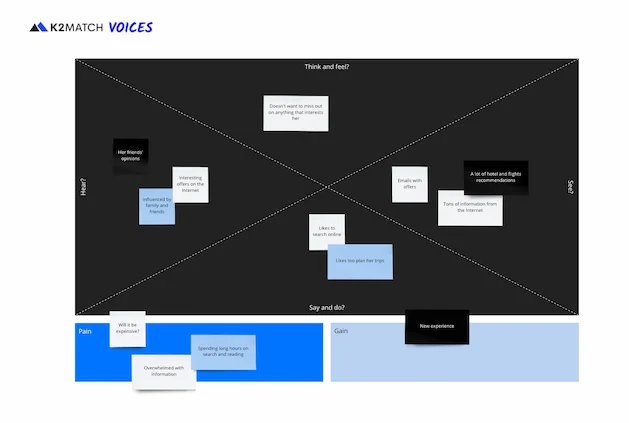
- What is the unique selling proposition (USP) that sets your offer apart from the competition?(innovation, novelty value)? What special benefit does your offer have from the customer's point of view? Does your customer also have financial advantages through your offer?
- How do you find out about changes in customer requirements in good time? What is required to adapt your offer to changing customer needs? How quickly can you react?
- What is the importance of your service and maintenance offer for your customers? What product/service guarantees do you offer?
Establishing Your Knowledge and Technological Advantage
If you want to generate increased customer benefit with your new product, then you need knowledge and a knowledge or technology advantage over your competitors. For example, have you developed new processes or technologies? Describe exactly what the innovation and what advantage it represents over competitors. The topic "Protection against copying or imitation through industrial property rights" is particularly important here. Have you applied for patents, for example?
Knowledge Management: Securing Intellectual Capital
Knowledge is power. This wisdom is especially true for successful entrepreneurs. Constantly updated knowledge, or even better a sustainable knowledge and technological advantage, secures your entrepreneurial freedom of action. Therefore, ensure the transfer of knowledge within your company, e.g. by means of a knowledge database.
Strategic Competitor Observation and Market Positioning
In order to build a sustainable company, you should know your position in the market and be well-informed about your competitors. Note: Competitors are all providers who solve the same problem for your customer, not only competitors who have a similar offer as you. Evaluate your competitors' offers according to the same criteria that you used for your own offer. In addition, you should also keep an eye on other market dealers and suppliers. This way you can react quickly to changes in the market.
Refining Your Unique Selling Proposition (USP) for Long-Term Success
The USP describes the characteristic of your product, that sets it apart from the market. It defines how your product will be indispensable and successful in the long term and focuses on customer benefits.
Here are some questions that need to be answered in this chapter:
- What is the technological advantage/innovation of your business idea?
- Why is a product like yours not yet available on the market?
- How sustainable will your knowledge and technology advantage be? How long will it take until competitors can also offer your product?
- What measures do you plan to take in order to maintain your lead in the long term? What costs will this incur?
Assessing Your State of Development and Technical Feasibility
In discussing this topic, put yourself in the position of an investor who wants to keep his risk as low as possible. A feasibility study or an existing prototype of a product makes an investor confident and convinces him that you are up to the technical challenges. If the product needs to be explained, you can use a picture or drawing to illustrate how it functions. Technical details would go too far at this point, the explanations should remain descriptive. In the ideal case, your product/service is already in use with a pilot customer. If there are still problems or open questions regarding technical feasibility, always show how you intend to overcome these difficulties.
Here are some questions that need to be answered in this chapter:
- At what stage of development is your product/service? Is there already a prototype? What development steps are you planning? What follow-up developments are you planning? Do you see development risks and how will you deal with them? Which development costs, also for the subsequent developments, will be incurred or have already been incurred?
- Do you own patents or licenses? Which patents and licenses are held by competitors? Do licenses have to be taken? How high will the patent and license costs be?
- Does your product/service have to be approved by the legislator? Which approvals/certifications etc. are needed? How and when will these be achieved? Are there one-time or recurring costs for approval or testing procedures?
Operational Planning: Manufacturing and Production Processes
Explain the manufacturing process of your product or the process necessary to provide your service. What equipment, apparatus, and/or premises must be purchased or rented? Describe how large the capacities are and to what extent the expansion of existing capacities is necessary to achieve the targeted sales volume. Also give an overview of what investments are involved. Show here the necessary steps for product/ service development and also keep them in the chapter Milestones and Realization Roadmap.
Here are some questions that need to be answered in this chapter:
- Describe the necessary process steps of product manufacturing/ service production in a flow chart. With which production capacity or capacity for the service production do you plan over the course of time? What investments do you have to make for this? What do they cost?
- How can you adjust the capacities to the demand in the short term? What effort, what costs are associated with a capacity expansion/reduction?
- What quantitative and qualitative resources (raw materials, materials for the provision of your service, know-how) do you need for the production of products or services? Which parts and services will you buy from third parties? How much will the production and delivery/provision of your offer cost?
- Where do you want to manufacture (in-house or third-party production)? How much will this cost you?
- What quality assurance measures do you plan to take? What do these cost?
Summary: Aligning Technical Excellence with Customer Benefit
The success of your business plan rests on your ability to translate a technical innovation into a tangible customer benefit. By clearly defining your Value Proposition, securing your technological advantage through knowledge management, and detailing a realistic manufacturing roadmap, you demonstrate to investors that your product is not just a concept, but a scalable business reality. A well-documented state of development further de-risks the venture, positioning your startup for a successful market entry.