Story, Positioning & Messaging: How Do They Fit Together?

Years ago, the concepts of positioning, messaging, and narrative in the startup world felt to me like a Gordian Knot of confusion. It was only after devoting approximately 3,856 hours into soaking up knowledge from podcasts, YouTube videos, blog posts, and books, that the fog started to lift and the true significance of these terms began to emerge.
So let's break it down in a digestible way.
The Startup House: A Framework for Positioning and Messaging
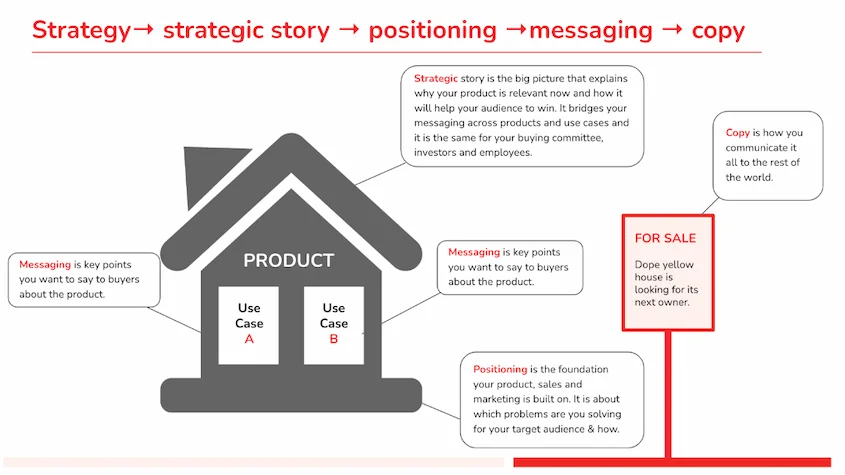
Picture your startup as a house. The diverse aspects of your startup's marketing strategy are the building blocks that contribute to the construction of this house.
1. Positioning: The Foundation of Your House
Consider positioning as the foundation of your house - it's fundamentally what your startup stands on. It's the compass that guides your product development, sales, and marketing. It outlines the specific problems that you're committed to solving for your audience and the unique ways you intend to do so.
2. Messaging: Communicating Value to the World
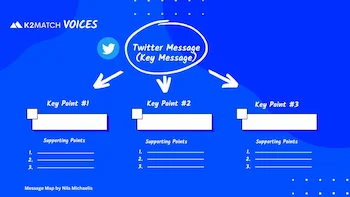
Having your positioning in place is step one, but it's only internal until you communicate it to the world. This is where messaging enters the scene. Given the constraints of our memory, you need to cherry-pick a few key things you want your audience to recall about your startup. This becomes your messaging - the crux of how you communicate the ways in which you solve problems. You repeat these key messages consistently across all the channels that your startup chooses to employ.
Important caveat: If your startup has three distinct buyer personas, you'll need three distinct messaging frameworks.
3. Copy: Articulating Your Message Through Voice
Once your messaging is decided, it's time to determine your copy - essentially the way you articulate your messages. Whether you're a fan of Ricky Gervais' wit, Sir David Attenborough's eloquence, or the complex jargon of geek speak, it's entirely up to you. Remember, your copy is not your messaging. It's how you present your messaging. The same messaging can be interpreted into different copy for your ads, landing pages, marketing collateral, etc. Your copy can evolve frequently, but the core message remains unchanged.
4. Strategic Narrative: The Roof Over Your Story
Lastly, let's talk about the strategic narrative or the story. This is the metaphorical roof over your house that ties together different personas, use cases, and markets that you cater to. Your story is about the bigger picture. It feeds into the changes occurring in your market, which shape the decision-making process of your audience. It highlights aspects like 'why now', 'winners and losers' and the ultimate 'promised land'. It explains your startup's raison d'etre. Your story remains consistent for all personas, employees, investors, and the outside world.
K2Match Investment Readiness: Master Your Market Positioning
As part of the K2 Match investment readiness program, we provide founders with positioning and messaging support to ensure they are able to sell more, raise more, hire better people and dominate their niche.
You will work with a positioning & messaging expert alongside a small group of your peers to achieve four key goals:
- Learn deep insights about your target audience.
- Craft a compelling strategic positioning narrative.
- Build a scalable messaging framework.
- Create a Go-To-Market (G2M) strategy built around your narrative.
The Results: Stand Out, Be Relevant, and Grow
- Stand out: Create a clear strategic narrative to stand out in the eyes of customers and attract sales.
- Be relevant: Build a research-driven messaging framework that resonates & drives conversions.
- Grow: Put your story into action with a G2M strategy built around your narrative.
This article was provided by K2Match Expert Lena Andican.